Urban Flow Logic
About Urban Flow Logic
Alright, so you know how sometimes you stumble across a game, and it just… clicks? Like, it resonates with something deep inside your gaming soul that you didn’t even realize was waiting to be sparked? That’s exactly what happened to me with *Urban Flow Logic*. Seriously, I’m not just saying this, but this game has completely consumed my free time lately, and I absolutely have to tell you about it because I think you’re going to be just as obsessed as I am.
You know how I’ve always been drawn to games that let you build something, that give you a sense of mastery over a complex system? Whether it’s city builders, intricate factory games, or even just really well-designed puzzle games that make your brain hum, there’s something magical about taking chaos and molding it into order. *Urban Flow Logic* takes that feeling and elevates it to an art form, but in a way that’s so grounded and almost… grimy, in the best possible sense.
Imagine this: you’re not some high-flying CEO or a god-like mayor. No, you’re a hands-on operative, a master plumber, an urban alchemist, if you will, called in because New York City’s entire subterranean network is on the verge of collapse. We’re talking about the veins and arteries of the city – water mains bursting, sewage lines backing up, power conduits shorting out, gas lines leaking… it’s a nightmare. And honestly, the initial premise alone got me hooked. It’s not about fighting dragons or saving the galaxy; it’s about saving the everyday flow of life for millions of people, one pipe, one valve, one junction at a time. There’s something so incredibly satisfying about that kind of practical heroism, you know?
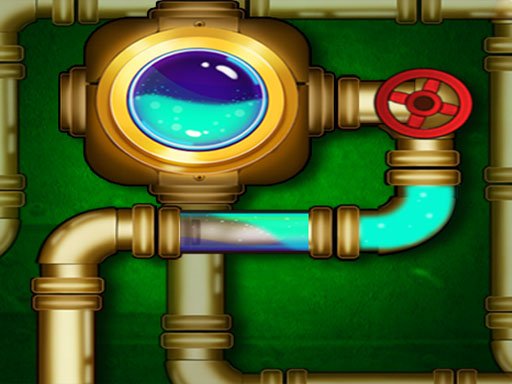
When you first load it up, the sheer scale is daunting. You’re presented with these sprawling, almost organic diagrams of city districts, each a tangled mess of color-coded lines representing different utilities. It’s like looking at a highly detailed, living blueprint, but one that’s constantly flashing red with alerts, groaning under pressure, and threatening to fall apart. What’s fascinating is that the game doesn't just throw you into the deep end without a paddle. It starts you off in a relatively contained neighborhood, a baptism by fire, but one where the stakes are manageable enough for you to learn the ropes.
You grab your virtual toolbox – and I mean, you literally feel the weight of the task. You’re not just clicking menus; you’re digging into the ground, you’re identifying the problem areas, and then the real puzzle begins. Each section of the city is its own self-contained challenge, a complex web of existing infrastructure that you have to untangle, repair, and often, completely redesign on the fly. You’ll find yourself tracing pipe routes, analyzing pressure readings, checking flow rates, and figuring out how to connect disparate systems without causing a catastrophic domino effect.
The brilliant thing about this is how they’ve integrated the "manual work" aspect. It’s not just an abstract concept. When you’re replacing a section of pipe, you’re often engaging in these incredibly tactile mini-games. You might have to perfectly align two pipe segments, weld them together with a precise timing mechanic, or meticulously tighten a series of bolts on a valve, all while a timer ticks down and the pressure gauge threatens to redline. It’s this constant push and pull between strategic overview and granular, hands-on execution that makes it so engaging. You’re thinking big picture – "how do I reroute the water supply for three blocks while I replace this main?" – but also small picture – "did I remember to seal that last joint properly, or am I going to have a leak on my hands?"
And the consequences? Oh, they’re very real. Mess up a water main repair, and suddenly a whole residential block is without water, and their "ludicrously high bills" are now *your* problem. Fail to fix a sewage backup quickly enough, and the public outcry meter starts climbing, impacting your reputation and future contracts. The game really makes you feel the weight of responsibility. There are these moments of pure tension, like when you’re trying to isolate a burst pipe in a crowded downtown area, knowing that every second you delay, the damage is spreading, and the cost is escalating. You can almost hear the frantic phone calls, the distant sirens, the general chaos that your expertise is meant to quell.
What I love about games like this is that feeling when a strategy finally clicks into place. You’ve been staring at a diagram for what feels like an hour, trying to figure out how to get clean water to the hospital while simultaneously diverting wastewater from a contaminated area, all without disrupting the power grid that runs the filtration plant. Then, suddenly, it’s like a light bulb goes off. You see the elegant solution, the perfect sequence of valve closures, pipe replacements, and new connections. And when you execute it, and you see all the red warning lights turn green, and the flow meters stabilize, and the city’s pulse returns to normal… man, that’s a rush. It’s that deep, primal satisfaction of solving a truly complex puzzle, of imposing your will on a chaotic system and making it sing.
The progression system is incredibly well-paced too. You start with basic tools and smaller jobs, earning "cash through ludicrously high bills" for successful repairs. But as you gain experience and reputation, you unlock advanced equipment – better diagnostic tools, more efficient piping materials, even specialized robots for accessing hard-to-reach areas. This isn’t just about making things easier; it opens up entirely new layers of strategic depth. You might start off just patching up old pipes, but eventually, you’re designing entirely new, optimized networks for entire districts, anticipating future growth and preventing problems before they even arise. That’s where the "changing lead into gold" metaphor really comes alive – you’re taking a decrepit, failing system and transforming it into a state-of-the-art marvel of engineering, earning serious coin in the process.
There's something incredibly visceral about the visual feedback in this game. When you successfully reroute a massive water main, you can almost *feel* the pressure surge, see the digital water flowing smoothly through the newly laid pipes, hear the satisfying hum of a system working perfectly. And when you zoom out and see an entire district, once riddled with red warning icons, now glowing with a calm, steady green, it’s genuinely awe-inspiring. You built that. You fixed that. You brought order to that chaos.
I mean, honestly, I’ve spent hours just meticulously planning out optimal pipe layouts, trying to achieve maximum efficiency and minimum material waste. It taps into that part of my brain that loves optimization, that thrives on finding the most elegant solution to a tricky problem. And because the city is so dynamic, with new problems constantly emerging – a sudden cold snap causing pipes to burst, an unexpected surge in population demanding more resources – you’re never truly "done." There’s always another challenge, another district on the verge of destruction, another opportunity to apply your "Urban Flow Logic" and save the day.
The real magic happens when you’re juggling multiple crises at once. Imagine a gas leak in one borough, a power outage in another, and a major water main break downtown, all hitting simultaneously. You have to prioritize, deploy your limited crews strategically, and make split-second decisions that could mean the difference between a minor inconvenience and a city-wide catastrophe. That’s when your heart rate really picks up, when you feel that tension in your shoulders, and when the satisfaction of pulling it off is almost euphoric.
It’s not just a puzzle game; it’s a living, breathing simulation of a city’s hidden lifeblood. It makes you look at real-world infrastructure with a newfound appreciation and understanding. And it truly makes you feel like an indispensable part of something massive and complex. If you’ve ever found joy in untangling wires, organizing your inventory, or just seeing a perfectly executed plan come to fruition, then you absolutely *have* to try *Urban Flow Logic*. It’s more than just a game; it’s an experience, a journey into the fascinating, grimy, and ultimately incredibly rewarding world beneath our feet. Trust me on this one, you won’t regret it.
You know how I’ve always been drawn to games that let you build something, that give you a sense of mastery over a complex system? Whether it’s city builders, intricate factory games, or even just really well-designed puzzle games that make your brain hum, there’s something magical about taking chaos and molding it into order. *Urban Flow Logic* takes that feeling and elevates it to an art form, but in a way that’s so grounded and almost… grimy, in the best possible sense.
Imagine this: you’re not some high-flying CEO or a god-like mayor. No, you’re a hands-on operative, a master plumber, an urban alchemist, if you will, called in because New York City’s entire subterranean network is on the verge of collapse. We’re talking about the veins and arteries of the city – water mains bursting, sewage lines backing up, power conduits shorting out, gas lines leaking… it’s a nightmare. And honestly, the initial premise alone got me hooked. It’s not about fighting dragons or saving the galaxy; it’s about saving the everyday flow of life for millions of people, one pipe, one valve, one junction at a time. There’s something so incredibly satisfying about that kind of practical heroism, you know?
When you first load it up, the sheer scale is daunting. You’re presented with these sprawling, almost organic diagrams of city districts, each a tangled mess of color-coded lines representing different utilities. It’s like looking at a highly detailed, living blueprint, but one that’s constantly flashing red with alerts, groaning under pressure, and threatening to fall apart. What’s fascinating is that the game doesn't just throw you into the deep end without a paddle. It starts you off in a relatively contained neighborhood, a baptism by fire, but one where the stakes are manageable enough for you to learn the ropes.
You grab your virtual toolbox – and I mean, you literally feel the weight of the task. You’re not just clicking menus; you’re digging into the ground, you’re identifying the problem areas, and then the real puzzle begins. Each section of the city is its own self-contained challenge, a complex web of existing infrastructure that you have to untangle, repair, and often, completely redesign on the fly. You’ll find yourself tracing pipe routes, analyzing pressure readings, checking flow rates, and figuring out how to connect disparate systems without causing a catastrophic domino effect.
The brilliant thing about this is how they’ve integrated the "manual work" aspect. It’s not just an abstract concept. When you’re replacing a section of pipe, you’re often engaging in these incredibly tactile mini-games. You might have to perfectly align two pipe segments, weld them together with a precise timing mechanic, or meticulously tighten a series of bolts on a valve, all while a timer ticks down and the pressure gauge threatens to redline. It’s this constant push and pull between strategic overview and granular, hands-on execution that makes it so engaging. You’re thinking big picture – "how do I reroute the water supply for three blocks while I replace this main?" – but also small picture – "did I remember to seal that last joint properly, or am I going to have a leak on my hands?"
And the consequences? Oh, they’re very real. Mess up a water main repair, and suddenly a whole residential block is without water, and their "ludicrously high bills" are now *your* problem. Fail to fix a sewage backup quickly enough, and the public outcry meter starts climbing, impacting your reputation and future contracts. The game really makes you feel the weight of responsibility. There are these moments of pure tension, like when you’re trying to isolate a burst pipe in a crowded downtown area, knowing that every second you delay, the damage is spreading, and the cost is escalating. You can almost hear the frantic phone calls, the distant sirens, the general chaos that your expertise is meant to quell.
What I love about games like this is that feeling when a strategy finally clicks into place. You’ve been staring at a diagram for what feels like an hour, trying to figure out how to get clean water to the hospital while simultaneously diverting wastewater from a contaminated area, all without disrupting the power grid that runs the filtration plant. Then, suddenly, it’s like a light bulb goes off. You see the elegant solution, the perfect sequence of valve closures, pipe replacements, and new connections. And when you execute it, and you see all the red warning lights turn green, and the flow meters stabilize, and the city’s pulse returns to normal… man, that’s a rush. It’s that deep, primal satisfaction of solving a truly complex puzzle, of imposing your will on a chaotic system and making it sing.
The progression system is incredibly well-paced too. You start with basic tools and smaller jobs, earning "cash through ludicrously high bills" for successful repairs. But as you gain experience and reputation, you unlock advanced equipment – better diagnostic tools, more efficient piping materials, even specialized robots for accessing hard-to-reach areas. This isn’t just about making things easier; it opens up entirely new layers of strategic depth. You might start off just patching up old pipes, but eventually, you’re designing entirely new, optimized networks for entire districts, anticipating future growth and preventing problems before they even arise. That’s where the "changing lead into gold" metaphor really comes alive – you’re taking a decrepit, failing system and transforming it into a state-of-the-art marvel of engineering, earning serious coin in the process.
There's something incredibly visceral about the visual feedback in this game. When you successfully reroute a massive water main, you can almost *feel* the pressure surge, see the digital water flowing smoothly through the newly laid pipes, hear the satisfying hum of a system working perfectly. And when you zoom out and see an entire district, once riddled with red warning icons, now glowing with a calm, steady green, it’s genuinely awe-inspiring. You built that. You fixed that. You brought order to that chaos.
I mean, honestly, I’ve spent hours just meticulously planning out optimal pipe layouts, trying to achieve maximum efficiency and minimum material waste. It taps into that part of my brain that loves optimization, that thrives on finding the most elegant solution to a tricky problem. And because the city is so dynamic, with new problems constantly emerging – a sudden cold snap causing pipes to burst, an unexpected surge in population demanding more resources – you’re never truly "done." There’s always another challenge, another district on the verge of destruction, another opportunity to apply your "Urban Flow Logic" and save the day.
The real magic happens when you’re juggling multiple crises at once. Imagine a gas leak in one borough, a power outage in another, and a major water main break downtown, all hitting simultaneously. You have to prioritize, deploy your limited crews strategically, and make split-second decisions that could mean the difference between a minor inconvenience and a city-wide catastrophe. That’s when your heart rate really picks up, when you feel that tension in your shoulders, and when the satisfaction of pulling it off is almost euphoric.
It’s not just a puzzle game; it’s a living, breathing simulation of a city’s hidden lifeblood. It makes you look at real-world infrastructure with a newfound appreciation and understanding. And it truly makes you feel like an indispensable part of something massive and complex. If you’ve ever found joy in untangling wires, organizing your inventory, or just seeing a perfectly executed plan come to fruition, then you absolutely *have* to try *Urban Flow Logic*. It’s more than just a game; it’s an experience, a journey into the fascinating, grimy, and ultimately incredibly rewarding world beneath our feet. Trust me on this one, you won’t regret it.
Enjoy playing Urban Flow Logic online for free on Rdmcu. This Puzzle game offers amazing gameplay and stunning graphics. No downloads required, play directly in your browser!
How to Play
You like manual work and you re not afraid to dirty your hands while on the job Then come change lead into gold and earn a lot of cash through ludicrously high bills in this new plumber game The piping of New York is on the verge of destruction and ever


Comments
This game is awesome! I love the graphics and gameplay.
One of the best games I've played recently. Highly recommended!